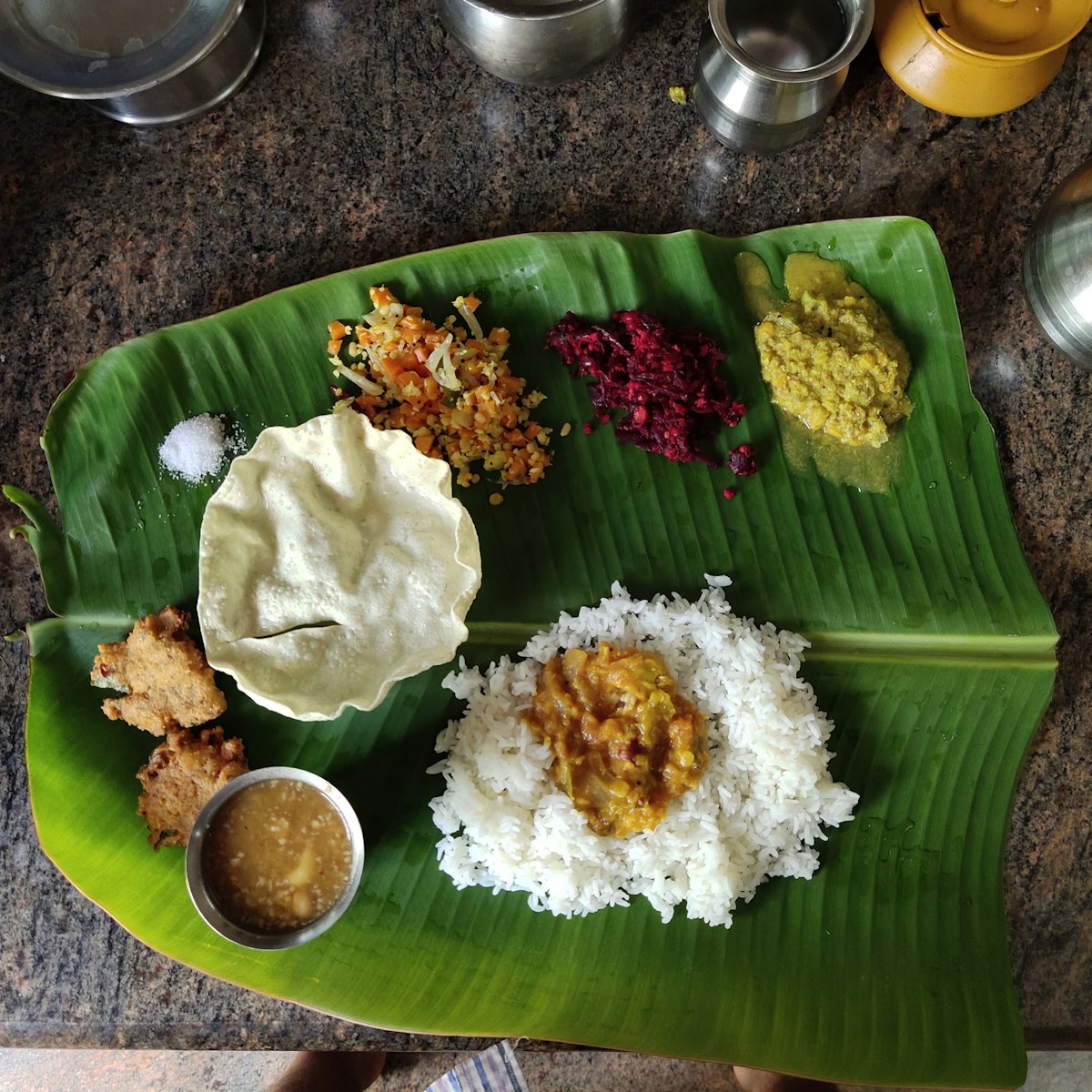
Nepali cuisine is a rich blend of Himalayan, Tibetan, and Indian influences, centred around the iconic dal bhat — a meal of steamed rice, lentil soup, vegetables, and pickle that locals eat twice daily. Beyond dal bhat, Nepal offers extraordinary diversity: Newari feasts with marinated buffalo meat, Tibetan-influenced momos (dumplings), Thakali thali from the Annapurna region, and street food that will change your perception of what NPR 100 can buy. This guide covers the 20 dishes every visitor must try, where to find them, and what to pay.
What Is Dal Bhat and Why Do Nepalis Eat It Every Day?
Dal bhat (literally "lentil rice") is Nepal's national meal, eaten for lunch and dinner by an estimated 80% of the population. The phrase "dal bhat power, 24 hour" is a genuine Nepali saying — locals believe this meal provides the energy to work, trek, and thrive at altitude.
A standard dal bhat set includes:
- Bhat — Steamed white rice (the centrepiece, served generously)
- Dal — Lentil soup, usually yellow lentils (musuro dal) or black lentils (kalo dal)
- Tarkari — Seasonal vegetable curry (potato, cauliflower, spinach, or mixed)
- Achar — Spicy pickle/condiment (tomato, radish, or chilli-based)
- Saag — Leafy green vegetables (spinach, mustard greens)
- Papad — Crispy lentil wafer
Upgraded versions add meat curry (chicken or mutton), fried fish, egg curry, yoghurt, and sweets.
Price: NPR 200-350 at local restaurants, NPR 400-700 at tourist restaurants. The critical detail: refills are unlimited and free. You eat as much rice, dal, and tarkari as you want. This is not a promotional gimmick — it is Nepali hospitality.
Where to eat the best dal bhat:
- Kathmandu: Thakali Kitchen (Thamel) — authentic Thakali-style dal bhat, NPR 350
- Pokhara: Pokhara Thakali (Lakeside) — generous portions, mountain-view seating, NPR 300
- Anywhere on a trek: Tea house dal bhat is the trekker's staple, NPR 400-600 at altitude
What Are Momos and Where Are the Best Ones?
Momos are Nepal's most beloved snack — steamed (or fried) dumplings filled with minced meat or vegetables, served with spicy tomato-sesame chutney. Originally Tibetan, momos have been adopted as quintessentially Nepali.
Types of momos:
- Steamed (classic) — The original and most common. Delicate, juicy, served in a bamboo steamer.
- Fried (kothey) — Pan-fried on one side for a crispy bottom, steamed on top. The textural contrast is addictive.
- Jhol momo — Served swimming in a spicy, tangy soup. Comfort food on cold evenings.
- C-momo — Doused in a thick, spicy chilli sauce. Kathmandu street food at its finest.
- Tandoori momo — Marinated in spices and cooked in a clay oven. A modern Nepali invention.
- Chocolate momo — Dessert momos with melted chocolate filling. Surprisingly delicious.
Fillings: Buff (buffalo) is the most traditional and popular. Chicken, pork, vegetable, paneer, and cheese are also common. Mutton momos exist but are less standard.
Price: NPR 100-200 for a plate of 8-10 at street stalls, NPR 250-400 at restaurants.
Best momo spots:
- Kathmandu: Everest Momo Centre (New Road) — legendary buff momos since 1985
- Kathmandu: Yangling Tibetan Restaurant (Thamel) — massive portions, authentic Tibetan style
- Pokhara: Momos Star (Lakeside) — excellent jhol momos
- Street stalls: The best momos are often from unnamed carts outside temples and bus stops. Look for long queues of locals.
What Is a Newari Feast and How Can You Experience One?
The Newari people of the Kathmandu Valley have one of Nepal's most sophisticated culinary traditions, with over 200 recorded dishes. A Newari feast (called bhway or bhojan) is a multi-course banquet that can include 20-30 dishes.
Essential Newari dishes:
- Choila — Spiced, grilled buffalo meat. Smoky, tender, and intensely flavoured with Sichuan pepper (timur) and chilli.
- Bara — Thick lentil pancakes, sometimes topped with egg or minced meat. The Newari answer to dosa.
- Yomari — Sweet steamed dumplings filled with treacle (chaku) and sesame. A festival delicacy.
- Chatamari — Often called "Newari pizza" — a rice flour crepe topped with minced meat, egg, and vegetables.
- Wo — Black lentil patties, fried crisp. Simple, earthy, and deeply satisfying.
- Samay Baji — The ceremonial platter: beaten rice (chiura), choila, bara, achar, boiled egg, ginger, black soybeans, and seasonal items. This is the proper Newari feast starter.
Where to experience Newari cuisine:
- Kirtipur (20 min from central Kathmandu) — The hilltop town is the spiritual home of Newari food. Try Newa Lahana for a full feast (NPR 600-1,000 per person).
- Patan Durbar Square area — Honacha and Newari Kitchen serve excellent Newari meals
- Bhaktapur — Street food including juju dhau (king curd), the creamiest yoghurt you will ever taste (NPR 50-80 per clay pot)
Cultural note: Newari feasts traditionally accompany celebrations — weddings, festivals, and religious ceremonies. As a tourist, you can experience this cuisine any day at dedicated Newari restaurants, but if you are in Nepal during Indra Jatra (September) or any Newari festival, ask your hotel about community feasts.
What Street Food Should You Try?
Nepal's street food scene is vibrant, affordable, and best discovered by following the crowds:
Must-try street foods:
Pani Puri / Golgappa (NPR 20-40 per plate) — The same crispy, tangy water-filled puffs popular across South Asia. Found at every street corner.
Chatpate (NPR 50-80) — A spicy, tangy mix of puffed rice, chickpeas, peanuts, onions, tomatoes, lemon juice, and green chillies. Nepal's answer to bhel puri, but with a fiercer kick.
Sel Roti (NPR 20-30 each) — Ring-shaped rice flour doughnut, crispy outside and soft inside. The essential festival bread, but available year-round at street stalls, especially in the morning.
Aloo Chop (NPR 30-50) — Spiced mashed potato fritter, deep-fried and served with chutney. Perfect with a cup of tea.
Sukuti (NPR 100-150) — Dried buffalo meat jerky, often stir-fried with chilli and spices. A popular drinking snack.
Lakhamari (NPR 30-50) — A hard, sweet bread from the Newar tradition. Comes in elaborate shapes for festivals.
Thukpa (NPR 100-200) — Tibetan noodle soup with vegetables or meat. Warming and filling on cold days.
Chow Mein (NPR 80-150) — Nepali-style stir-fried noodles, found absolutely everywhere. The Nepali version is spicier and more colourful than its Chinese ancestor.
Food safety for street food: Look for stalls that are busy (high turnover means fresh food), where food is cooked to order (not sitting in the open), and where the vendor uses clean utensils. Avoid raw salads and unpeeled fruit from street vendors. The rule of thumb: if it is hot, freshly cooked, and busy, you are safe.
What Should Vegetarian and Vegan Travellers Know?
Nepal is one of the most vegetarian-friendly countries in Asia, partly due to Hindu dietary traditions and partly due to Buddhist influence.
Good news for vegetarians:
- Dal bhat is naturally vegetarian (just skip the meat curry add-on)
- Vegetable momos are available everywhere
- Paneer dishes, mushroom curries, and tofu preparations are common in tourist areas
- Newari cuisine has many vegetarian dishes (bara, chatamari, achar varieties)
- "Pure veg" restaurants exist in every tourist area, often run by Marwari or South Indian communities
Vegan considerations:
- Dal bhat is often vegan by default (clarify that ghee is not used in cooking)
- Many Nepali curries use mustard oil rather than ghee — naturally vegan
- Tofu is widely available in Kathmandu and Pokhara (Nepali tofu is softer than Japanese-style)
- Thukpa and chow mein can be made vegan on request
- Ask for "masu nahalnus" (no meat) and "ghee nahalnus" (no ghee/butter)
Dishes to watch out for:
- Achar (pickle) sometimes contains dried fish or shrimp
- Dal may be tempered with ghee
- Fried items may share oil with meat products at street stalls
Best vegetarian restaurants:
- Kathmandu: Places Restaurant (Thamel) — excellent vegetarian Nepali-fusion
- Kathmandu: OR2K (Thamel) — Israeli-Mediterranean vegetarian, beloved by backpackers
- Pokhara: Freshly Baked (Lakeside) — vegan-friendly bakery and cafe
What About Drinks — Tea, Coffee, and Local Beverages?
Nepal's drink culture is rich and varied:
Chiya (Nepali tea): The social glue of Nepal. Sweet, milky, spiced with cardamom, cloves, and sometimes ginger. Available at every street corner for NPR 15-30. Nepalis drink 4-6 cups per day, and refusing a cup of chiya is mildly rude.
Nepali coffee: Nepal's coffee industry has boomed. High-altitude beans from Gulmi, Palpa, and Nuwakot produce excellent single-origin coffee. Kathmandu and Pokhara have thriving cafe cultures — expect NPR 150-300 for an espresso-based drink. Try Himalayan Java, 1905, or Cafe Soma for quality beans.
Local alcoholic drinks:
- Tongba — Fermented millet beer, served in a wooden container with hot water poured over the millet. You drink through a bamboo straw. Originated in eastern Nepal (Limbu culture) but available in Kathmandu. NPR 200-400.
- Raksi — Home-distilled rice or millet spirit. Potent (30-40% ABV), served warm. The Nepali equivalent of grappa or moonshine.
- Chhyang — Fermented rice beer, milky white, mildly alcoholic. Common in Tamang and Sherpa communities along trekking routes.
- Nepal Ice, Gorkha, Everest — Commercial lager beers, NPR 250-400 for a 650ml bottle. Nepal Ice is the most popular. All are decent, refreshing lagers.
Non-alcoholic:
- Lassi — Yoghurt drink, sweet or salted. NPR 50-100.
- Fresh juice — Orange, pomegranate, and sugarcane juice from street stalls. NPR 50-100.
- Juju Dhau — Bhaktapur's famous "king of yoghurt." Creamy, sweet, set in a clay pot. NPR 50-80. Worth a special trip to Bhaktapur.
What Are the Top Food Experiences for Tourists?
Beyond everyday eating, Nepal offers food experiences you cannot find elsewhere:
Thakali Thali in a Thakali Bhanchha — The Thakali people of the Annapurna region run some of Nepal's best restaurants. A proper Thakali set is more elaborate than standard dal bhat, with 8-12 items including pickles, dhido (buckwheat porridge), and local greens. NPR 400-600. Best experienced in Kathmandu at Thakali Kitchen or on the Jomsom trek.
Cooking class in Kathmandu or Pokhara — Learn to make momos, dal bhat, and sel roti. Classes run NPR 2,000-4,000 for a half-day including market visit. Try Backstreet Academy or Nepali Cooking School in Thamel.
Bhaktapur food walk — Walk through the medieval streets tasting juju dhau, yomari (seasonal), bara, and chatamari from street vendors. Self-guided or with a local guide (NPR 2,000-3,000).
Farm-to-table in Nagarkot or Dhulikhel — Hillside resorts increasingly offer meals with locally grown organic produce and mountain views. Search Nagarkot hotels on BookGarum for properties with restaurant facilities.
Everest Base Camp trek dal bhat challenge — Trekkers fuel entirely on dal bhat for 12-14 days. By the end, you will have a genuine emotional relationship with lentils and rice.
Practical Tips: Prices, Hygiene, and Dietary Notes
Budget food guide:
- Street snack: NPR 20-100
- Local restaurant meal: NPR 150-350
- Tourist restaurant meal: NPR 400-800
- Fine dining: NPR 1,000-2,500
- Daily food budget (comfortable): NPR 800-1,500
Food safety essentials:
- Drink only bottled or filtered water (never tap water)
- Eat at busy establishments with high turnover
- Avoid raw salads outside upscale restaurants
- Street momos from busy stalls are generally safe (freshly steamed = sterile)
- Carry Imodium and oral rehydration salts as backup
- "Delhi belly" affects 30-50% of travellers in South Asia — it is usually mild and passes in 24-48 hours
Allergy and dietary notes:
- Peanuts and tree nuts are common in Nepali cooking (chatpate, chutneys, desserts)
- Gluten-free options are limited — rice-based dishes are your safest bet
- Soy is common in Nepali Chinese dishes
- Mustard oil is the primary cooking fat — inform restaurants if you have a mustard allergy
Nepal's food is reason enough to visit. From a NPR 100 plate of momos on a Kathmandu street corner to a 30-dish Newari feast in Kirtipur, the cuisine is generous, flavourful, and deeply tied to the culture.
Book your Nepal hotel on BookGarum →
Related reads: