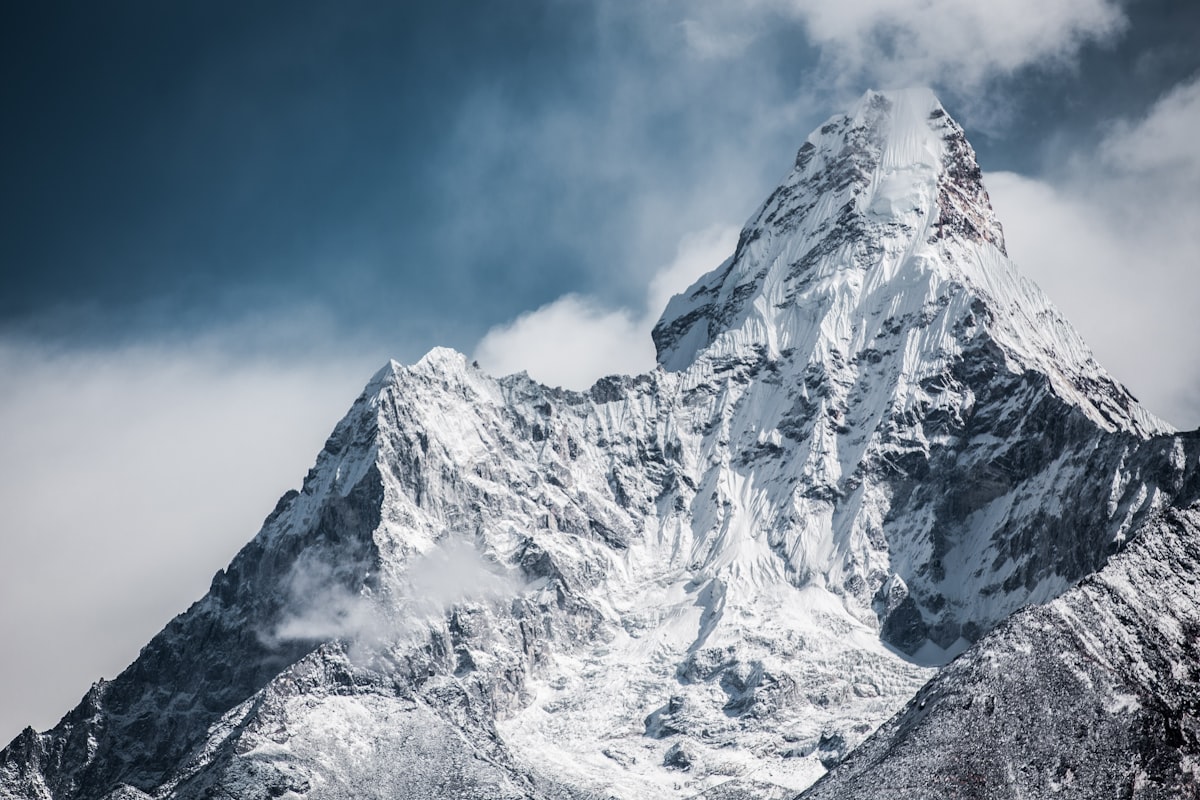
The Everest Base Camp (EBC) trek is the most iconic trekking experience on Earth, and it is entirely achievable for beginners with proper preparation. The standard 14-day round trip from Lukla reaches 5,364 metres at Everest Base Camp and 5,644 metres at Kala Patthar (the classic Everest viewpoint), costs approximately USD 1,500-3,000 depending on your style, and requires no technical climbing skills — only reasonable fitness, proper acclimatisation, and mental determination. You do not need to be an athlete, but you do need to respect the altitude, prepare your body, and give yourself enough time on the trail.
What Does the Standard 14-Day EBC Trek Itinerary Look Like?
The 14-day itinerary is designed around safe acclimatisation — the schedule includes strategic rest days that give your body time to adapt to decreasing oxygen levels. Cutting days to save time is the single most dangerous decision trekkers make.
Day 1: Kathmandu to Lukla (2,840m), trek to Phakding (2,652m) The adventure begins with the famous flight to Lukla — a 35-minute bush flight from Kathmandu to one of the world's most dramatic airstrips. Short trek through Sherpa villages to Phakding. Easy, 3-4 hours walking.
Day 2: Phakding to Namche Bazaar (3,440m) Cross suspension bridges over the Dudh Koshi river (one of which offers your first Everest glimpse on clear days), then climb steeply to Namche Bazaar — the Sherpa capital and largest town in the Khumbu. Strenuous, 5-6 hours. The altitude gain of 800m makes this one of the hardest days.
Day 3: Acclimatisation day in Namche Bazaar Critical rest day. Do not stay in bed — take a hike up to the Everest View Hotel (3,880m) for panoramic views, visit the Sherpa Museum, or walk to Thame. The rule is "climb high, sleep low" — ascending during the day and returning to sleep at your current elevation helps acclimatisation.
Day 4: Namche to Tengboche (3,860m) Traverse above the Dudh Koshi valley with views of Everest, Lhotse, Nuptse, and Ama Dablam (widely considered the most beautiful mountain in the Himalayas). Arrive at Tengboche Monastery, the largest in the Khumbu. Moderate, 5-6 hours.
Day 5: Tengboche to Dingboche (4,410m) Descend through rhododendron forest to the Imja Khola valley, then climb to Dingboche, a yak-farming village surrounded by dry stone walls. The landscape becomes increasingly alpine — trees thin out and eventually disappear. Moderate, 5-6 hours.
Day 6: Acclimatisation day in Dingboche Second critical rest day. Hike to Nagarjun Hill (5,100m) for views of Makalu (8,485m) and the Imja Valley. Return to Dingboche for the night. You may experience mild AMS symptoms (headache, loss of appetite) — this is normal and should improve with rest and hydration.
Day 7: Dingboche to Lobuche (4,940m) Trek through the Khumbu's stark, glacier-carved landscape. Pass the memorial chorten (stupas) at Dugla Pass, honouring climbers who died on Everest and other Khumbu peaks. The memorials are a sobering reminder of the mountains' power. Moderate, 4-5 hours.
Day 8: Lobuche to Gorak Shep (5,164m), hike to Kala Patthar (5,644m) The biggest day of the trek. Walk across the Khumbu Glacier's lateral moraine to Gorak Shep — the last settlement. Drop your bags and climb Kala Patthar for sunset. The summit offers the classic Everest photograph — the full pyramid of Everest with the Khumbu Icefall cascading below. At 5,644m, this is the highest point you will reach. Strenuous, 7-8 hours total.
Day 9: Gorak Shep to Everest Base Camp (5,364m), back to Lobuche (4,940m) Early morning trek to Everest Base Camp. During climbing season (April-May), the camp is a colourful tent city; outside season, it is a rocky, glacier-strewn plateau. The emotion of standing where expeditions begin their Everest attempts is profound. Return to Lobuche — the descent helps recovery. Strenuous, 7-8 hours.
Days 10-14: Descent The return follows the same route but moves faster. Typical stops: Lobuche to Tengboche (Day 10), Tengboche to Namche (Day 11), rest day or exploration in Namche (Day 12), Namche to Lukla (Day 13), Lukla to Kathmandu (Day 14). Budget an extra day in case of flight cancellations from Lukla — weather delays are common.
How Fit Do You Need to Be for the EBC Trek?
This is the most common question, and the honest answer is: you need to be fitter than average but you do not need to be an athlete. The EBC trek is a walking challenge, not a mountaineering expedition. The difficulty comes from altitude and duration, not technical terrain.
Minimum fitness requirements:
- Walk 6-8 hours on hilly terrain without injury
- Climb 500-800 steps in a single ascent without needing extended rest
- Carry a 6-8 kg daypack for a full day
- Sustain moderate physical effort for 12-14 consecutive days
Recommended training plan (8-12 weeks before trek):
| Week | Activity | Frequency | Duration |
|---|---|---|---|
| 1-4 | Walking with elevation (hills, stairs) | 4x/week | 45-60 min |
| 1-4 | Cardio (running, cycling, swimming) | 3x/week | 30-45 min |
| 5-8 | Long hikes with loaded pack (8 kg) | 2x/week | 2-4 hours |
| 5-8 | Strength (squats, lunges, step-ups) | 2x/week | 30 min |
| 9-12 | Back-to-back long hikes (weekend) | Weekly | 4-6 hours/day |
| 9-12 | Stair climbing with pack | 2x/week | 30-45 min |
Key insight: Cardiovascular endurance matters more than raw strength. The trek is about sustained, moderate effort over many hours, not bursts of power. If you can hike 15 km with 600m elevation gain while carrying a daypack and feel tired but not destroyed, you are ready.
Age considerations: People from 12 to 70+ have completed the EBC trek. Age is less important than fitness and acclimatisation discipline. Older trekkers often do better because they are more patient with pace and more disciplined about rest days.
What Is Altitude Sickness and How Do You Prevent It?
Acute Mountain Sickness (AMS) is the single greatest risk on the EBC trek. It is caused by reduced oxygen at high altitude (above 2,500m) and can affect anyone regardless of fitness, age, or prior altitude experience. Understanding and respecting AMS is non-negotiable.
Symptoms of mild AMS (common above 3,500m):
- Headache (the most reliable early indicator)
- Loss of appetite, nausea
- Difficulty sleeping, vivid dreams
- Fatigue and shortness of breath beyond what the exertion explains
- Dizziness, light-headedness
Symptoms of severe AMS/HACE/HAPE (medical emergency):
- Persistent vomiting
- Confusion, disorientation, inability to walk a straight line (ataxia)
- Severe breathlessness at rest
- Coughing pink or bloody sputum
- Blue lips or fingernails
Prevention strategies:
- Ascend slowly: The 14-day itinerary builds in proper acclimatisation. Never gain more than 400-500m of sleeping altitude per day above 3,000m.
- Climb high, sleep low: On rest days, hike to a higher point and return to sleep at your current altitude. This is the most effective acclimatisation technique.
- Hydrate aggressively: 3-4 litres of water daily. Dehydration worsens AMS symptoms. Urine should be clear — dark urine means you need more water.
- Diamox (Acetazolamide): A prescription medication that accelerates acclimatisation. Many trekkers take 125-250mg twice daily starting at 3,000m. Consult your travel doctor before departure. Side effects include tingling fingers and increased urination.
- Avoid alcohol and sleeping pills: Both suppress breathing, which worsens AMS.
- Eat carbohydrates: Your body processes carbs more efficiently at altitude than fat or protein. Dal bhat (rice and lentils) is the perfect altitude food.
- Monitor symptoms: Use the Lake Louise AMS scoring system (your guide should know this). Score of 3+ means rest; 5+ means descend.
The golden rule: If symptoms are worsening, descend immediately. Even 500m of descent can bring dramatic improvement. Do not wait, do not hope symptoms will pass overnight, do not let pride override safety. Evacuation by helicopter costs USD 3,000-5,000 (covered by most travel insurance policies) — a small price compared to the consequences of ignoring severe AMS.
How Much Does the EBC Trek Cost?
The EBC trek is a significant investment, but costs vary enormously depending on your approach.
Budget independent trek (USD 1,200-1,800):
| Expense | Cost (USD) |
|---|---|
| Lukla flight (return) | 350-400 |
| Sagarmatha National Park permit | 30 |
| TIMS card | 15 |
| Licensed guide (14 days) | 350-500 |
| Teahouse accommodation (13 nights) | 40-100 |
| Food on trek (13 days) | 300-500 |
| Kathmandu hotel (2-3 nights) | 30-80 |
| Travel insurance with evacuation cover | 50-100 |
| Miscellaneous (hot showers, charging, snacks, tips) | 100-200 |
Comfortable independent trek (USD 2,000-3,000): Add a porter (USD 200-350), better teahouse rooms, more varied food, and gear rental.
All-inclusive agency package (USD 1,500-4,000): Agencies handle everything — flights, permits, guide, porter, accommodation, and meals. The convenience premium is significant but removes all logistical stress.
Money management on the trail:
- Carry all cash in Nepali rupees from Kathmandu. There are no ATMs above Namche Bazaar (and Namche's ATMs are unreliable).
- Budget NPR 3,000-5,000 per day for food and accommodation above Namche.
- Prices increase with altitude: a dal bhat that costs NPR 500 in Namche costs NPR 800-1,000 in Gorak Shep.
- Hot showers (NPR 300-500), device charging (NPR 300-500 per charge), and Wi-Fi (NPR 300-500) are extra costs that add up.
For pre-trek and post-trek accommodation in Kathmandu, BookGarum lists properties ranging from budget to luxury — Thamel hotels are most convenient for accessing trekking shops and the domestic airport.
What Is the Best Season for the EBC Trek?
Autumn (October-November) — BEST OVERALL Clear skies, stable weather, excellent Himalayan views, and comfortable daytime temperatures. Night temperatures at Base Camp drop to -10 to -15°C. This is peak season — teahouses fill up and the trail is busy. The views are worth the crowds.
Spring (April-May) — EXCELLENT Warmer than autumn, with rhododendron forests blooming at lower elevations. Mountain views are good in the morning, with afternoon clouds building. April is slightly quieter than October. May coincides with Everest climbing season — Base Camp is a bustling tent city, adding drama to your arrival.
Winter (December-February) — CHALLENGING BUT REWARDING Bitterly cold (-20 to -25°C at night above 4,000m) but spectacularly clear skies. Some teahouses above Dingboche close for winter. The trail is nearly deserted — a profoundly different experience from peak season. Not recommended for first-time high-altitude trekkers.
Monsoon (June-September) — NOT RECOMMENDED Heavy rain, clouds blocking all mountain views, leeches at lower altitudes, and slippery trails. The Lukla flight cancellation rate skyrockets. Avoid unless you have no alternative dates.
What Essential Gear Should Beginners Bring?
The EBC trek does not require technical equipment — it is a walking trek on established trails with teahouse accommodation. However, the right gear makes the difference between enjoying and enduring the experience.
Non-negotiable items:
- Trekking boots: Broken-in, waterproof, ankle-supporting. The single most critical item. Break them in over 50+ km before the trek.
- Down jacket: Essential above 4,000m. Teahouse dining rooms are unheated in the evenings. A jacket rated to -10°C is sufficient.
- Sleeping bag: Rated to -15°C minimum. Teahouse blankets are thin and shared between trekkers. Rent in Kathmandu (NPR 100-150/day) if not bringing your own.
- Trekking poles: Reduce knee strain by 25-30% on the long descents. Collapsible poles pack easily.
- Sun protection: Sunscreen SPF50, UV sunglasses (or glacier glasses above 5,000m), sun hat, lip balm with SPF.
- Water management: 2 x 1-litre bottles plus purification tablets or SteriPEN. Do not buy plastic bottles on the trail — the waste problem in the Khumbu is severe.
- Headtorch: Essential for early-morning Kala Patthar starts and teahouse power cuts.
- First aid kit: Diamox, ibuprofen, oral rehydration salts, plasters, antiseptic, blister treatment, personal medications.
Layering system:
- Base layer: Merino wool top and bottoms (2 sets)
- Mid layer: Fleece jacket
- Insulation: Down jacket
- Outer: Waterproof/windproof shell (jacket and trousers)
- Extremities: Warm hat, buff/neck gaiter, liner gloves + warm outer gloves, 4 pairs wool socks
What you can skip:
- Camping gear (teahouses throughout)
- Cooking equipment (meals at teahouses)
- Excessive clothing changes (you will wear the same base layers for days — everyone does)
- Heavy electronics beyond a phone and power bank
Pack weight: Aim for 7-9 kg in your daypack if using a porter for the main bag. If carrying everything yourself, 12-15 kg maximum. Every extra kilogramme is felt acutely above 4,000m.
The Everest Base Camp trek is not the hardest trek in Nepal — the Manaslu Circuit and the Three Passes trek are both more demanding. But it is the most famous for a reason: the combination of Sherpa culture, Himalayan scenery, and the magnetic pull of standing at the foot of the world's highest mountain creates an experience that stays with you permanently. Prepare properly, respect the altitude, walk at your own pace, and you will return from 5,364 metres with a story you will tell for the rest of your life.